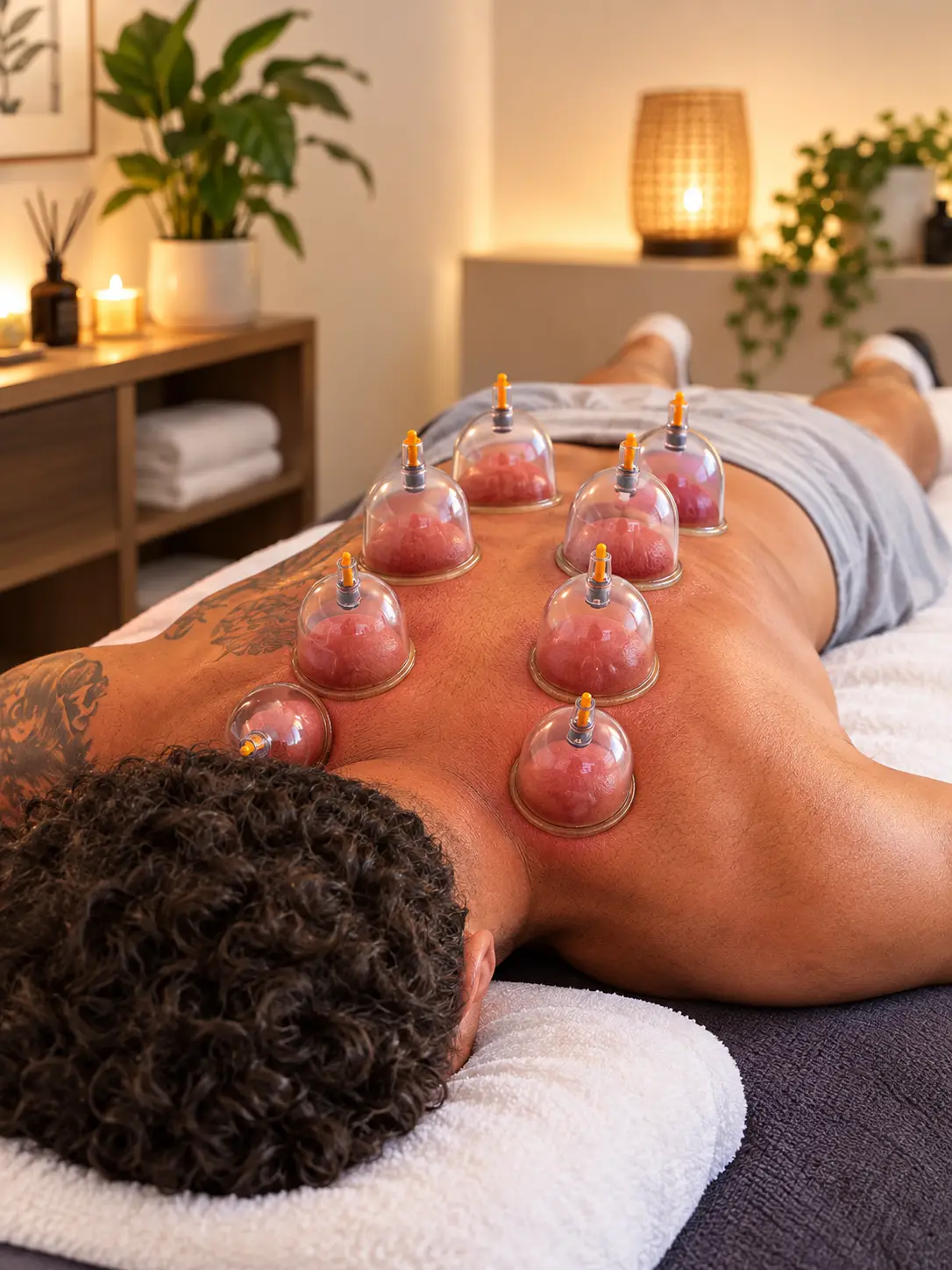
You have probably seen the round marks on athletes’ backs, or heard a friend rave about how loose they felt after cupping. If you are thinking about trying cupping therapy in Larnaca, it is normal to have questions: does it hurt, what are the marks, and is hijama the same thing? Here is a clear, honest guide so you know exactly what to expect.
What is cupping therapy?
Cupping is a traditional therapy where cups are placed on the skin and suction is created inside them. Instead of pressing down into the muscle like a massage, cupping gently lifts the skin and the tissue beneath it. Many people describe it as a deep stretch from the inside out.
There are two main types:
- Dry cupping: suction only. The cups may stay in place for a few minutes or be glided over oiled skin, which feels like a slow, pulling massage.
- Wet cupping (hijama): after a short period of dry cupping, the therapist makes a few tiny, shallow scratches in the skin, then reapplies the cups to draw out a small amount of blood.
What is hijama?
Hijama is the Arabic name for wet cupping. It has a long history in Middle Eastern, Islamic and traditional medicine, and many people choose it for cultural and personal reasons as well as for relaxation. Because it involves breaking the skin, it should only be done in a clean clinical setting with single-use sterile equipment and a trained practitioner.
Is cupping safe?
When cupping therapy in Larnaca, or anywhere else, is done by a trained therapist with good hygiene, it is generally considered low risk for healthy adults. The most common side effects are mild and short-lived:
- Round marks on the skin that fade over a few days to about a week
- Mild tenderness where the cups were
- Feeling lightheaded or tired straight afterwards, especially after hijama
With wet cupping there is also a small risk of skin infection or scarring, which is why sterile, single-use blades and cups and proper aftercare matter so much.
Who should avoid cupping or check with a doctor first
- Anyone taking blood thinners or with a bleeding or clotting disorder
- People with anaemia, low blood pressure or who faint easily (especially for hijama)
- Pregnant women
- Anyone with broken, sunburnt or infected skin, varicose veins or a recent injury in the area
- People with a fever, diabetes that affects healing, or a heart condition
If any of these apply to you, speak to your doctor first and let the therapist know when you book.
What does the research say?
Some studies suggest cupping may help with neck, shoulder and lower back pain, but many of these studies are small, and researchers agree that more high-quality evidence is needed. Most people treat cupping as one part of looking after their body, alongside movement, stretching and massage, rather than as a cure. Be wary of anyone who claims cupping can treat serious illness.
Do the marks hurt?
Usually not. The marks are not bruises from impact. They appear because suction draws blood towards the surface of the skin. They might feel slightly tender, but most people say they barely notice them. Darker marks often fade more slowly. If you have an event, a beach day or a photo shoot coming up, plan your cupping therapy in Larnaca a week ahead.
What happens during a session?
- A quick chat: your therapist asks about your health, medication and where you feel tension.
- Preparation: the skin is cleaned and a little oil may be applied.
- Cupping: cups are placed on the back, shoulders or legs for a few minutes. You will feel a pulling sensation, which should never be sharp or painful.
- Hijama only: the cups are removed, a few tiny surface scratches are made, and the cups are placed back on briefly.
- Finishing: the area is cleaned and covered if needed, and you get aftercare advice.
Many people book cupping alongside a massage, so the therapist can loosen the muscles first and then use the cups on the tightest spots.
Aftercare tips
- Drink plenty of water and have something to eat afterwards
- Keep the area warm and covered, and avoid cold drafts and air conditioning blowing on it
- Skip hard training, saunas and very hot showers for the rest of the day
- After hijama, keep the skin clean and dry for 24 hours and don’t pick at the marks
- Contact a doctor if you notice redness spreading, heat, pus or a fever
How often can you have cupping?
Dry cupping can be repeated every one to two weeks if your skin has recovered and the marks have faded. Hijama is usually spaced further apart, often every few weeks or months. If you are new to cupping therapy in Larnaca, your therapist will suggest a rhythm that suits you.
Try cupping and hijama in Larnaca
If you would like to try cupping therapy in Larnaca, Massage n’ Wellness offers dry cupping and hijama in a calm, clean clinic in central Larnaca, on its own or combined with a massage. Have a question first? Get in touch or call +357 99 196139.
Leave a Reply